March 11, 2026
Why Gutters Are One of the Most Important Parts of Your Home
Most homeowners don't think about gutters. They sit at the top of the house, out of sight, doing their job quietly — until they stop. By the time you notice the problem, the damage is rarely just about the gutters anymore.
That's the strange thing about gutters: they're one of the cheapest systems on your home and one of the most consequential. Done right, they protect tens of thousands of dollars of structure, foundation, and finish work. Done wrong — or ignored — they quietly destroy all three.
Here's why they matter more than people give them credit for, especially in Florida.
What Gutters Actually Do
A gutter system has one job: move water away from your house. That sounds simple until you do the math.
A 2,000-square-foot Florida home, hit with a single inch of rain, sheds about 1,250 gallons of water off its roof. Multiply that by Jacksonville's average ~52 inches of annual rainfall and you're talking about 65,000 gallons of water per year flowing off your roof.
Without gutters, all of that water hits the ground in a four-foot strip around your house — splashing back onto your siding, soaking into your foundation, and washing out your landscaping.
Gutters take that flood and redirect it to two or three downspouts that carry it safely away from the house. That's it. That's the whole job. And it's the difference between a dry home and a slow-motion disaster.
What Happens When They Fail
Failed gutters don't announce themselves. They cause damage in places you can't easily see:
- Fascia rot. When gutters overflow or pull away from the house, water gets behind them and soaks the fascia boards. Within a few seasons, you're looking at $5,000–$15,000 to replace rotted wood, plus the gutters themselves.
- Foundation cracks. Water dumped at the base of your foundation saturates the soil. In Florida's sandy-on-top, clay-underneath soils, that soaks down, then settles unevenly. Cracks follow. Foundation repair starts at $4,000 and climbs fast.
- Mold and mildew. Wet siding, wet soffits, wet crawl spaces — all from gutter overflow — create perfect conditions for mold inside your walls.
- Landscaping erosion. That $8,000 bed of mature plantings doesn't survive a single rainy season of cascading water hitting the same spots.
- Mosquito breeding. Standing water in clogged gutters is the #1 mosquito breeding habitat on most properties — and in Florida that's a health issue, not just an annoyance.
The cruel math: skipping a $250 gutter cleaning to "save money" can cost you a five-figure repair within three years.
Why Florida Is Different
Most parts of the country can get away with mediocre gutters. Florida cannot.
Three factors make gutters more critical here than almost anywhere:
- Tropical downpours. A 30-minute Florida storm can drop two inches of rain. An undersized or sagging gutter just overflows — and overflow is what causes all the damage above.
- Live oaks and pines. Florida's signature trees drop debris year-round. Standard gutters clog faster here than they do in Ohio or Texas. Without guards, expect to clean 2–4 times a year.
- Hurricanes. A neglected gutter system is one of the first things to fail in a tropical storm. Loose hangers, rotted fascia, and overflowing downspouts turn into the entry point for water that destroys an attic.
This is why we build every Broadside install for Florida specifically — heavier-gauge aluminum, hidden hangers every 24 inches, proper pitch, and downspouts routed at least six feet from the foundation.
What a Good Gutter System Actually Looks Like
If you're evaluating your current gutters — or thinking about replacing them — here's what separates good from bad:
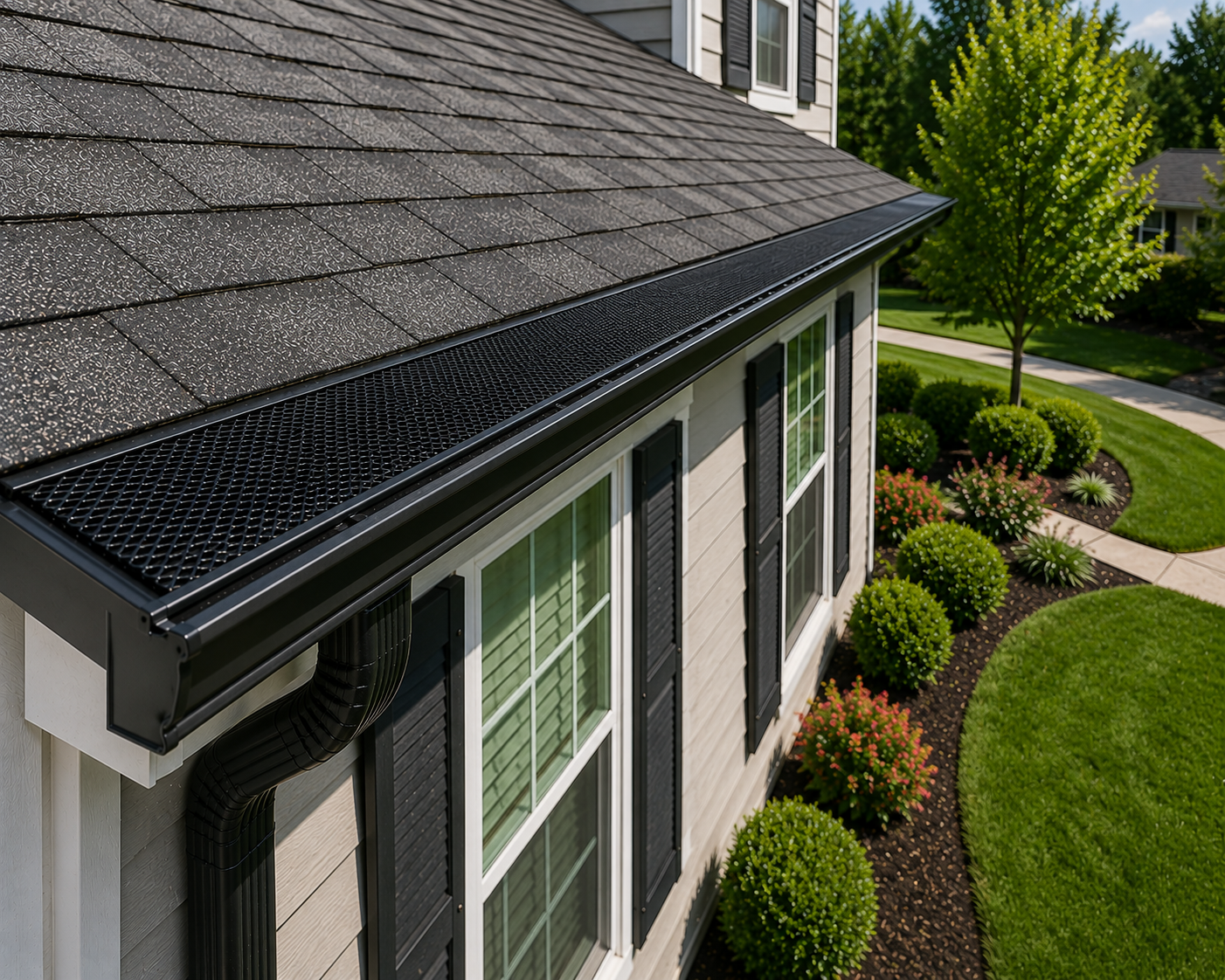
- Seamless aluminum, not sectional. Sectional gutters leak at every joint. Seamless gutters are formed on-site from a single roll, eliminating those failure points.
- 5" or 6" K-style sized to your roof. Bigger isn't always better, but undersized is always worse. We size every system to the actual square footage of your roof.
- Hidden hangers every 24 inches. Spike-and-ferrule mounts work loose in three to five years. Hidden hangers hold for decades.
- Pitch toward downspouts. Water flows. If a gutter isn't pitched correctly, it pools, sags, and overflows.
- Downspouts that carry water away. A downspout that dumps water at the foundation is almost as bad as no gutter at all. Extensions or underground drains move it where it can't hurt the house.
The Bottom Line
Gutters aren't glamorous. Nobody buys a house because the gutters are great. But ignored or poorly installed gutters quietly cost more homeowners more money than almost any other exterior system.
If your gutters are sagging, leaking, overflowing, or older than your roof — it's worth a free inspection. We'll walk your roofline, tell you honestly what's working and what isn't, and put it in writing.
Sometimes a quick fix is all you need. Sometimes a full replacement saves you tens of thousands long-term. Either way, you'll know.
That's the only sales pitch we make.
Broadside Gutters & Exteriors is family-owned and serves Jacksonville, Ponte Vedra, St. Augustine, and all of Northeast Florida. Free, no-pressure inspections. Lifetime workmanship warranty.
Call or text: (904) 501-1830
ADDITIONAL BeaRS STORIES